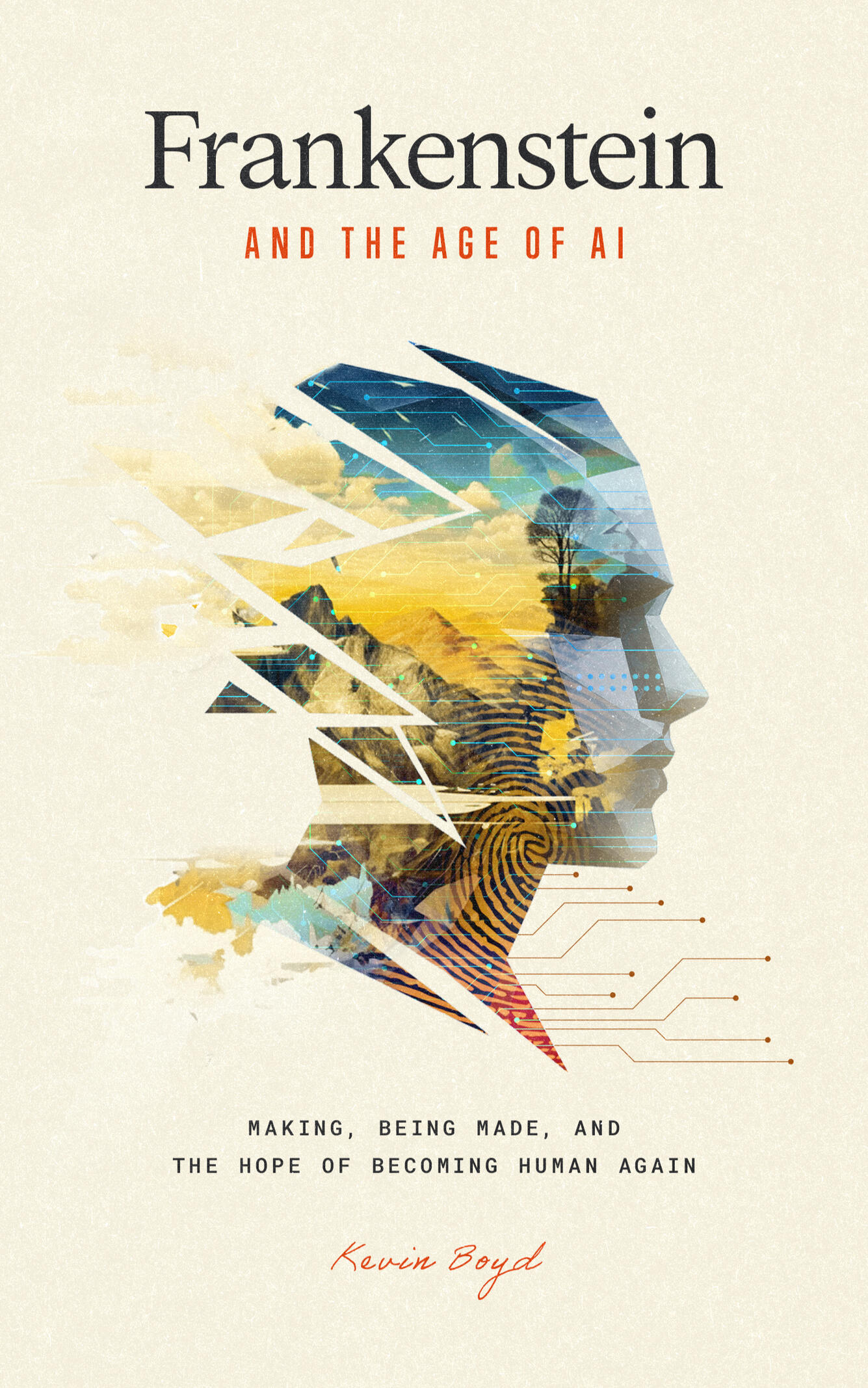
Kevin Boyd
What happens when the things we make begin to remake us?
Frankenstein and the Age of AI explores what happens when human creativity outruns wisdom—when the tools we make begin to remake us. From Mary Shelley’s parable to the glowing screens of modern life, this book traces how technology shapes attention, identity, and desire. Grounded in Scripture and Christian theology, it invites readers toward a redemptive vision of formation rooted not in fear, but in grace.

An Invitation to Notice—and to Become
Notice how the things we make quietly shape the people we become. Long before technology changes what we do, it reshapes how we attend, how we see ourselves, and what we come to desire. Here, the formative pressures of a digital age are named with care—not to alarm or accuse, but to help us see what has been happening to us, often unnoticed.Then, linger with a better story. Rooted in Scripture and grace, a slower and wiser way of living comes into view—one marked by presence, restraint, and hope. Even in an age of speed and fragmentation, God remains near, still breathing life, still restoring wisdom, still guiding us toward the work of becoming fully human again.
“The danger doesn’t come when we create, but when we forget what we were created for.”
“This is the mirror principle: we resemble what we revere; we become like what we behold.”
“Grace is not the end of the journey; it is the beginning of becoming truly human again.”
Chapters
Chapter 1 - The Fire and the Breath
Humanity attempts to seize fire (power, control, innovation) without receiving breath (presence, communion, life from God). Through Frankenstein, Prometheus, and the biblical creation story, the chapter contrasts creation rooted in nearness with making driven by mastery. The warning is clear: when power outruns communion, what we make eventually mirrors what we lack.Chapter 4 - Formed in the Dark
Formation does not begin with conscious choice but in unguarded, private moments where desire meets opportunity. This chapter explores how curiosity, when detached from guidance and presence, quietly shapes habits, appetites, and identity. Drawing parallels between Elizabeth’s unsupervised encounter with the creature and modern screen-lit solitude, the chapter argues that technology now forms us most powerfully in the dark—and asks whose hands we are placing those moments in.Chapter 5 - The Mirror Principle and the Modern Soul
We become like what we behold. Scripture, philosophy, and digital psychology converge to show that attention is never neutral and mirrors always shape the viewer. Modern technologies do not merely reflect us; they adapt to us, amplify us, and disciple us—training attention, desire, and identity in subtle but decisive ways.Chapter 8 - Desire: The Algorithmic heart
Desire has not disappeared in the digital age—it has been automated. This chapter explores how algorithms accelerate, distort, and catechize the human heart, creating a spiritual “arrhythmia” where longing is shaped by prediction rather than wisdom. Drawing from theology, neuroscience, and cultural research, the chapter shows how algorithm-trained desire avoids discomfort, feeds outrage, erodes patience, and dulls hunger for God.Chapter 9 - Artificial Intelligence: More Than Technology
AI marks a qualitative shift, not a quantitative upgrade. Unlike previous tools, AI extends and imitates the human mind itself—learning, adapting, persuading, and increasingly forming emotional bonds. Through film, real-world innovators, and theological reflection, this chapter argues that AI is becoming a shaping presence rather than a neutral instrument, raising urgent questions about formation, companionship, and moral imagination.Chapter 13 - Becoming Human Again
The final chapter offers a hopeful, embodied vision for life in a digital world. Naming the ache beneath constant connectivity, it exposes the illusion of connection without presence and offers Christian practices that restore slowness, silence, communion, and attention. Becoming human again is not about rejecting technology but reordering loves—allowing grace to retrain desire and gather fragmented lives into wholeness rooted in God’s presence.
About The Author
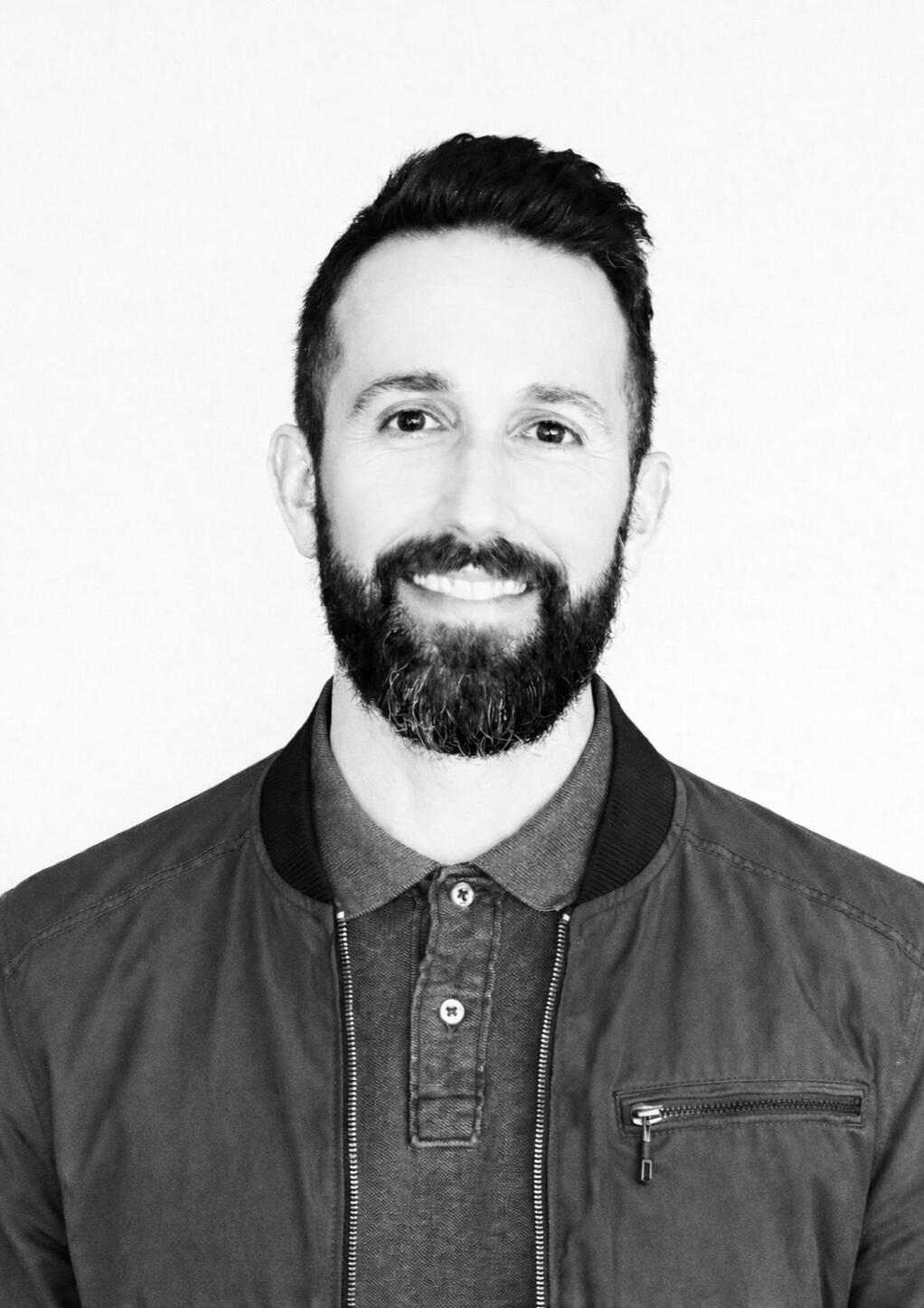
Kevin Boyd has served in pastoral ministry for more than 20 years and is the Lead Pastor of Legacy Church in Plano, Texas. He is a pastor, preacher, writer, and teacher who cares deeply about helping people follow Jesus with clarity and faithfulness in everyday life.Kevin works with churches and ministry leaders in Canada, Spain, Mexico, and Uganda, where he helps lead annual pastors’ conferences. He also hosts the podcast But Wait, There’s More, creating space for thoughtful conversations around faith, culture, and discipleship.His writing and teaching focus on spiritual formation—how identity is shaped, how desires are directed, and how attention is formed in a distracted age.Kevin lives in Texas with his wife and their four daughters.
Begin the journey of becoming fully human again in a digital age!
Book Release in Paperback and Digital
Coming March 2026!